
Definition: Leveraging knowledge of individual psychology, learning theory, motivation theory and intentional change theory to achieve one’s potential.
Between stimulus and response there is a space. In that space is our power to choose our response. In our response lies our growth and our freedom.
Viktor Frankl
Personal Motivators
Personal Motivators: In ORGD 6080 we had an opportunity to explore our personal motivators through a paper and presentation. What I found through this personal reflection exercise is that I certainly have some deficiency motivators, such as duty, hard work and recognition, while also balancing that with growth motivators such as learning, health, self-awareness and community impact. Recognizing these intrinsic motivators has helped me to better understand my behavior and how I impact the systems I serve in my role as a change agent. To see the full presentation and paper, click on the embedded links.
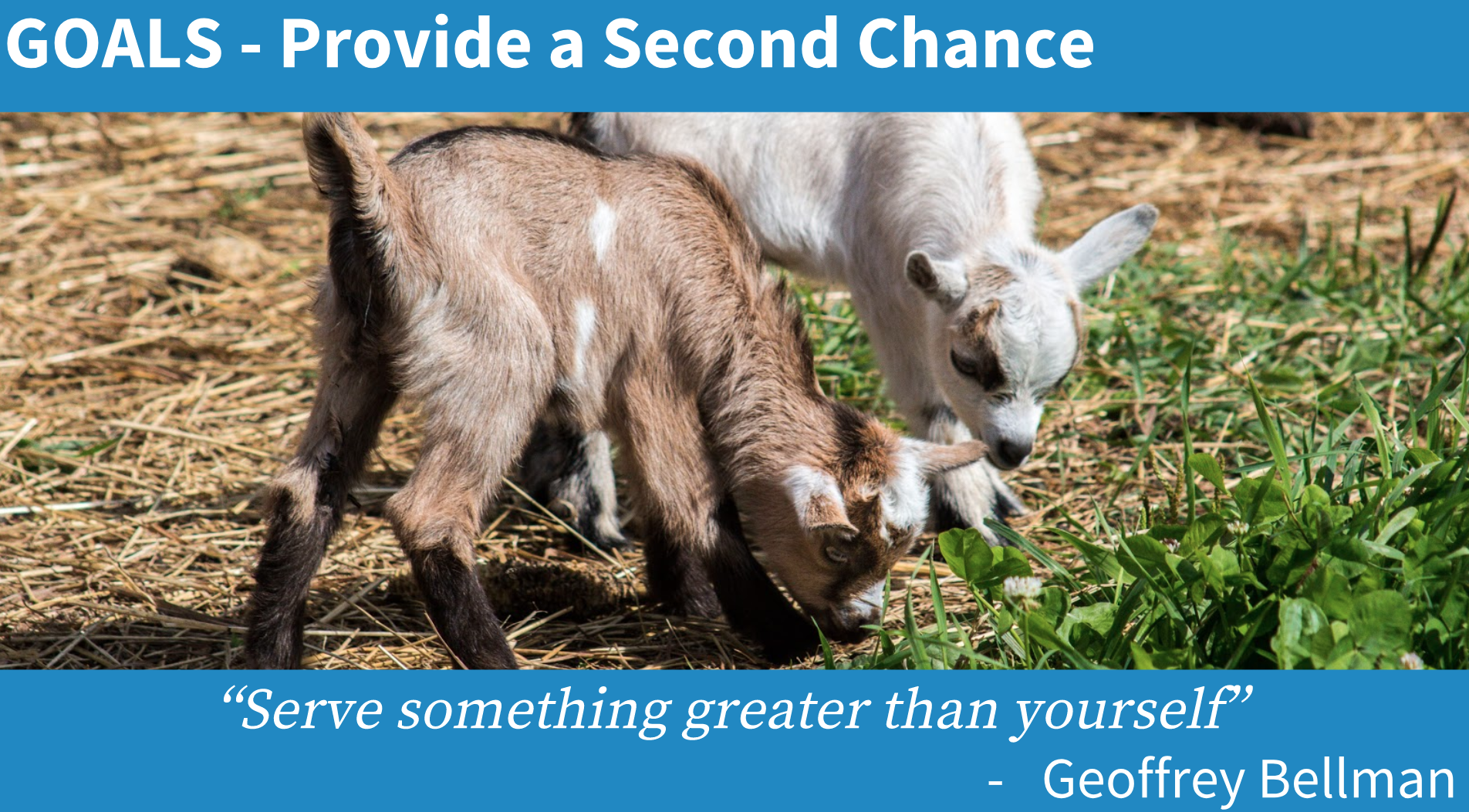
Personal Vision
Personal Vision: In our first class with Dr. O’Neil, she mentioned the importance of a personal vision. We revisited the concept a number of times throughout our program and in our process for crafting our Ideal Leader Self paper and presentation was the first time it crystalized in such a clear picture for me. This image represents one of my future goals – to give back to my community through creating a second chance organization that supports returning citizens with work, housing and job readiness skills. Much of the work I have done in this program has been about readying me to step into this great unknown world with confidence, knowing that I have the skills to make an impact and I can safely say that I feel prepared to do so.
EMOD Experience
Individual Effectiveness
For me there are two interrelated sides of this competency. There is my own personal effectiveness as an OD Practitioner, which comes through continuous self-evaluation and development. The other is supporting the individual effectiveness of others that I may work with in a client system. I will focus primarily on the former, as the assignments and experiences I had related to personal development provided significant personal Ahas, and also provided guidance for how to develop others.
I found the concept of ‘Use of Self’ to be somewhat synonymous with the self-development journey through this program. I will admit that when I first encountered the term ‘Use of Self’ I thought I understood it. Each time I hear it and interact with this concept, I learn something new and recognize the need to enhance this competency. There are two quotes that have helped me to understand the concept of ‘Use of Self’ in different ways; the first from a theoretical perspective and the second from an applied perspective:
“Use of self is the conscious use of one’s whole being in the intentional execution of one’s role for effectiveness in whatever the current situation is presenting. The purpose is to be able to execute a role effectively, for others and the system they’re in, without personal interference (e.g., bias, blindness, avoidance, and agendas) and with enough consciousness to have clear intentionality and choice. Our use of self should always be thought of in a specific context, exercised through some role, in service of something helpful and aligned with one’s personal intentions (i.e., mission, vision, goals, and values). “Who we are” always goes with us into each of our roles and situations. Our collective knowledge, thoughts, feelings, experiences, and vulnerabilities inform all that we do. (Jamieson, Shechtman & Auron, 2010).
Frankly, there is nothing more important to me as a consultant than becoming myself more fully…You can load yourself down with all your consulting models and tools and methods and techniques, but they do not operate themselves. They are all used by you with your clients, who are looking for your uniqueness. They will see whether you are a skilled consultant using your talents with integrity, or merely a mechanic carrying a tool box (Bellman, 2002, pp. 97-98).
In-Class Work: One of the very first assignments where we began to explore what makes us who we are was our ‘What Motivates You?’ Paper and Presentation in ORGD 6080. This was an eye opening exercise to peel back the onion and see how much of my drivers and motivators were influenced not only by my family, but also by the systems and structures in which we grew up (schools), live (society) and work (organizations). Having awareness of these motivators, particularly those that are deficiency based motivators has helped me to take more control of my learning process as I have moved through the program – continually striving to move more fully to a learning versus achievement orientation. I will say that the assignments that I have completed over the last two semesters have definitely felt that way. In particular because as I get closer to the type of work I want to do, it no longer feels like work. Not that it isn’t challenging, or tiring at times, but that I see the potential impact and it brings me joy.
A significant assignment that really caused me to reflect on this concept was the Use of Self as Tool paper for ORGD 6020 with Dr. Wheeler where we reflected on our current level of competence in all of the skills and behaviors required of a Change Agent. In this assignment, I explored who I am through all of the various roles that I play and how those roles support me in being an effective change agent. And, just as important, I explored my strengths and development areas, creating more acute awareness to ensure that when I am supporting a system, I am operating from a place of strength, thus supporting success for the organization. Identifying the personal development gaps and developing a plan to address them was something that immediately translated into my role as an internal consultant, in supporting leaders in helping to create their own development plans by first addressing what success looks like, conducting a rigorous assessment of current state and then designing a plan to move forward.
We further explored this concept through our ‘Statement of Ideal Leader Self’ paper and presentation for ORGD 6070 with Dr. O’Neil. This iteration of self-exploration was a much richer experience for me for a couple of reasons. First, the completion of the exercises in Becoming a Resonant Leader (McKee, Boyatzis & Johnston, 2008) provided a great template not only for my own personal development but for thinking about how I can support the development of others, whether on my team or leaders that I coach within the systems that I work. Secondly, from a personal development perspective, I had experienced a number of additional self-reflective exercises outside of our syllabi (See Extra-Curricular Learning) that have influenced my understanding of my Ideal Self and how I want to be, as well as who and where I want to impact in this world.
Extracurricular Learning: The following interactions and exercises have been pivotal in my personal growth and understanding of my role as a change agent and global citizen. While they were technically ‘off syllabus’ learnings, I know that these experiences were both afforded and supported by my experience in the EMOD program.
- “From the moment we interact with a client system we are intervening” – this quote came from a conversation I had with Mee-Yan Chung-Judge, an OD Scholar Practitioner I met while at the OD Network conference in October of 2018 and it shook me to my core. It was as if I understood the concept in a whole new light. While not her intention I’m sure, Mee-Yan’s words caused me to reflect on so many interventions I’ve carried out, wondering whether my intentions were in the right place, whether I caused more harm that I helped
- ‘Search Your Shadows’ – This exercise was found in The Consultant’s Calling (Bellman, 2002) and was one that Dr. Cady referenced many times throughout our two semesters with him. I had on my ToDo list for a long time before sitting down to actually do it. My interaction with Mee-Yan helped to catalyze this, recognizing that awareness of my shadow side, my insecurities, anxieties and worries, provides understanding and by naming those things can actually reduce the anxiety that limits my effectiveness. While I still have more exploring to do, the initial exercise was helpful in beginning the dialogue with myself.
- “Let go of the Outcome” – Dr. Cady invited a guest to one of our classes who shared a story about the importance of focusing on process rather than outcome. He was conducting a mediation with two attorneys and all was going well, when suddenly one of the attorneys started acting out and walked out of the mediation. The mediation was over and, in the consultant’s mind it had failed. A few moments later, the attorney who acted out came back and shared that she was only going to be paid if the case went to court. In that moment, the consultant recognized that he needed to let go out the outcome because the only thing he had control over was the process. This was such an aha for me. As someone with a high nAch (achievement orientation) score, this helped me to understand this idea of focusing on what I can control (e.g. process) and focusing on learning from each situation I participate in.
Application outside of Class: The quote “If you build it, they will come” struck me as relevant as I think about the work I am doing now in my own organization. We are embarking on a multi-faceted journey of building our talent management and development philosophy and strategy and I am serving as the project manager for the work. I see direct application of the learnings I have experienced regarding Individual Effectiveness in many of those functions. Most particularly, we are launching a 360 assessment process that is being used to support the creation of individual development plans for all of our leaders. We have adopted a new competency framework that provides the foundation for what successful application of these competencies looks like, to allow leaders to measure their current skills against the success profile. One of the elements I would like to build into the development planning process is an exploration of ‘Ideal Future Self’ so that the development of competencies is directed and supported by the positive emotional attractor (Boyatzis & Akrivou, 2006) rather than being solely deficit focused.
We spent a significant amount of time in ORGD 6020 focusing on theories, tools and in-class assignments that supported my understanding of group effectiveness. However, beyond this individual class, some of my greatest learning has come in the application of these concepts on other team assignments throughout the program, as well as utilizing these learnings in my work.