Definition: Application of group dynamics theory including roles, communication process, decision-making processes, stages of group development, leadership to increase team cohesion and effectiveness.
Teamwork begins by building trust. And the only way to do that is to overcome our need for invulnerability.
Patrick Lencioni
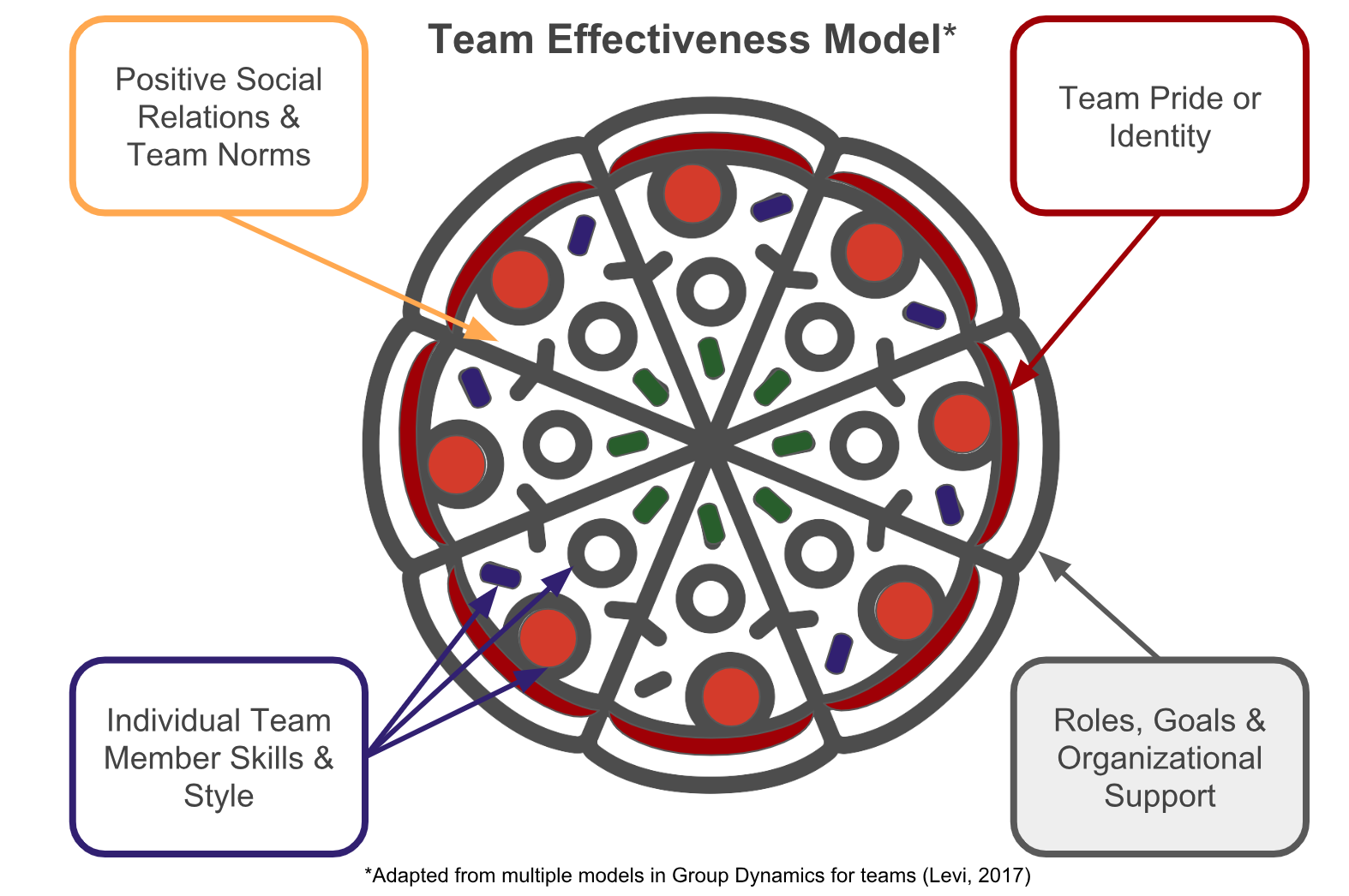
Pizza Model of Team Effectiveness
Pizza Model of Team Effectiveness: This was a model of team effectiveness I created, synthesizing a number of different models into a digestible format for a team intervention I conducted in my workplace. The team leader loved the model and found it helpful in understanding where some of the team concerns may have been coming from.
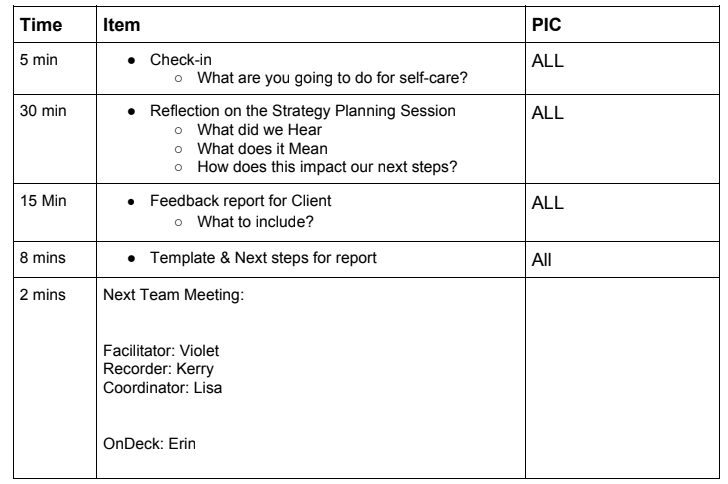
Team Charter & Agenda
Team Charter & Agenda: One of the items that I have found to support successful team dynamics is starting out with a Team Chartering process to establish the team purpose, roles and norms. Additionally, a structured team agenda that incorporates a check-in process to allow for team process in addition to task focus supports the building of team cohesion. The team agenda, should be followed for every meeting as this structure supports enacting the team norms and accountability practices. For a sample Team Charter & Team Agenda visit the embedded links.
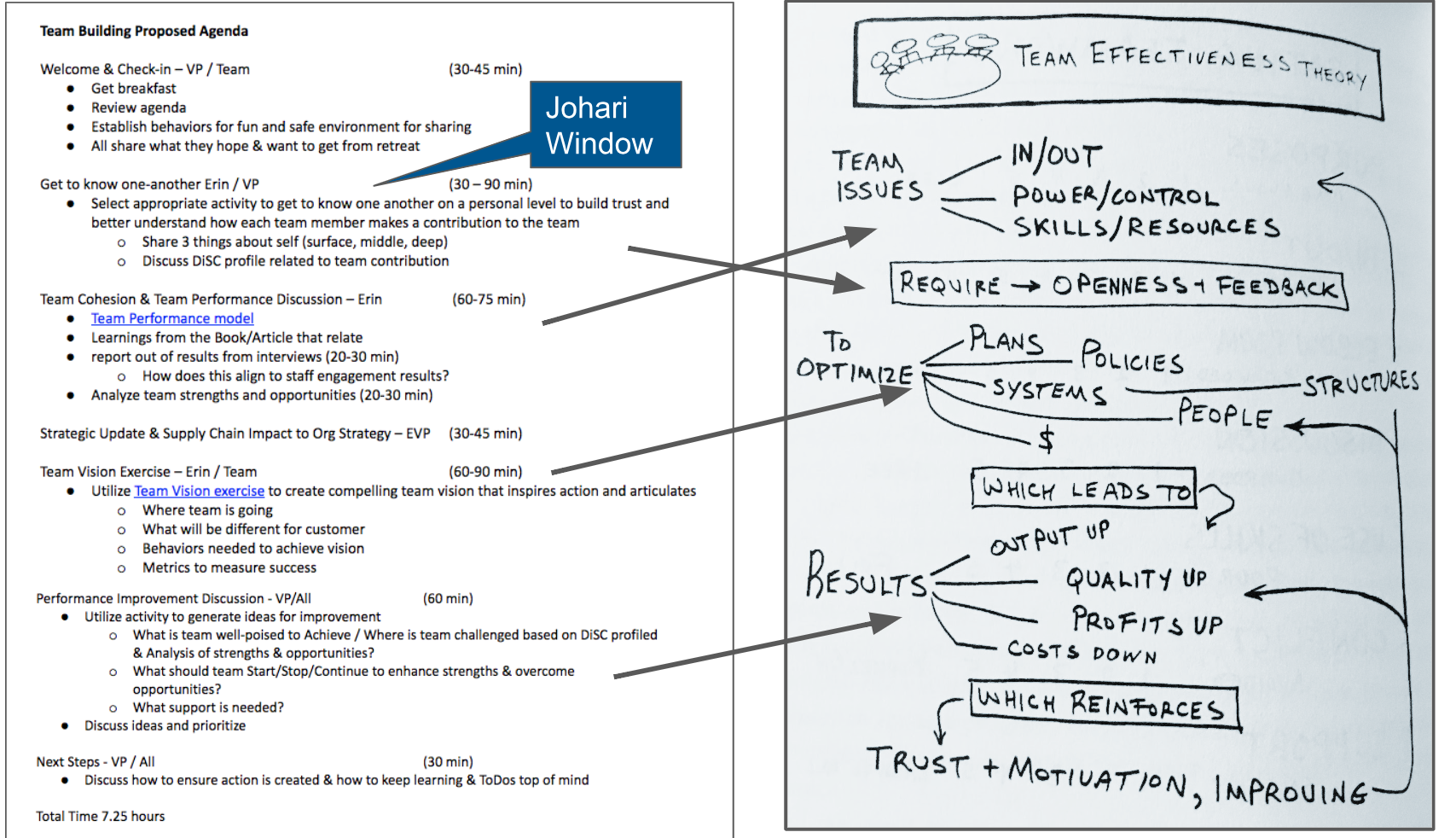
Team Building Using Blansfield’s Model
Team Building Using Blansfield’s Model: I recently designed a team building agenda for a leader in my organization and followed along with Blansfield’s Team Effectiveness Theory, ensuring that there was emphasis on the importance of team fundamentals as well as plans, systems and structures that support optimized results. In my opinion, this model helps to anchor the two together, recognizes that a team cannot focus on one over another, but must connect the two and balance focus. To see a full screen view of the comparison click here: Team Building Using Blansfield Model
EMOD Experience
We spent a significant amount of time in ORGD 6020 focusing on theories, tools and in-class assignments that supported my understanding of group effectiveness. However, beyond this individual class, some of my greatest learning has come in the application of these concepts on other team assignments throughout the program, as well as utilizing these learnings in my work.
In-Class Work: The book ‘Group Dynamics for Teams’ (Levi, 2017) continues to be a go-to resources for me due to the great balance between theory, tools and examples of application, so much so that I have shared it with a number of my team members at work. Two of the tools from this book that have supported every single group project I have worked on since reading this book is the Team Chartering process, as well as using a very structured agenda format with a check-in process that contributes to the team getting to know one another. I have found that the use of both of these tools has supported the effective management of group projects despite the fact that we are meeting virtually and often working asynchronously because they create shared team norms, accountability structures and mechanisms to address concerns as they arise.
The concept of the Johari Window was one that I had heard before this program, however when I re-encountered it through an in-class activity in ORDG 6020 it was a like a light shining on every team-building activity and theory of team development I have participated in or facilitated my past. What the concept provided was terminology and theory to understand the importance of why team check-ins at the beginning of meetings and self-disclosure activities are so critical to team cohesion and building trust.
Finally, a visual representation of team effectiveness theory that has also served as a go-to reference for my assessment and recommendation process when working to support group effectiveness is Blansfield’s model of ‘Team Effectiveness Theory’ (Weisbord, 2012, p. 380) (see fig. 1) which came from a book we received in Dr. Cady’s ORGD 6060 course. I use this model to work through what questions I may want to ask to better understand the symptoms a leader is experiencing which prompted them to call me. I then work towards the top of the model to understand what some of the root causes may be in why the team is experiencing less than optimal results. Another use of this model that I have found to be effective is in working with leaders when they ask for support in creating a retreat agenda or team-building activity. What this model helped to anchor is the importance of tying team dynamic to results and balancing a focus on task and process when working with teams.
Application Outside of Class: I have applied many of the concepts I have learned related to team effectiveness in almost all of my client interactions since this foundational experience in ORGD 6020. A few highlights are as follows:
- The Pizza Model for Team Effectiveness – During our Individual Organization Diagnosis Project for ORGD 6040 I was working with a team who had a number of challenging dynamics at play. One thing I thought might be helpful was an accessible visual to understand all of the elements that contribute to effective team dynamic. Borrowing from several theories and models in Levi’s book, I created my own Pizza Model for Team Effectiveness that I shared. I will say that the team was somewhat underwhelmed by my model, however the leader loved it and found it to be extremely helpful in her understanding of some of the elements at play in the team dynamic. I still have the model hanging in my office and often get questions about it. It could likely use some tweaking but it is something that I am very fond of as I think about the concept of ‘blend mastery’ that Dr. Cady often references.
- Supply Chain Leadership Retreat – When I moved to my new role in January, supporting a new group of leaders, I was very quickly approached by our VP of supply chain to support him in creating a leadership retreat with his team in Spring. I utilize Blansfield’s model and the Diagnostic Process Model to work through my consultative process, and I included many of the theories and concepts from ORGD 6020, including the Johari Window in designing the outline for the retreat as well as the data collection that will help support the discussion.
- Family Team Agenda & Charter – Not only have I used the team charter and agenda for school projects we have also applied these tools for our family meetings (including Kevin, my sister and I) and have found that they yield robust discussion and increase the feeling of inclusion as everyone has the ability to add to the agenda and we rotate facilitation and note-taking responsibilities.