
Definition: The ability to conduct an iterative series of inquiries into a system’s (individual, group or organization) effectiveness based on a perceived gap in performance, analyzing to determine root cause(s) and recommend the relevant interventions that support moving towards the desired state.
The problem is not the problem
Peter Block
Sample Work
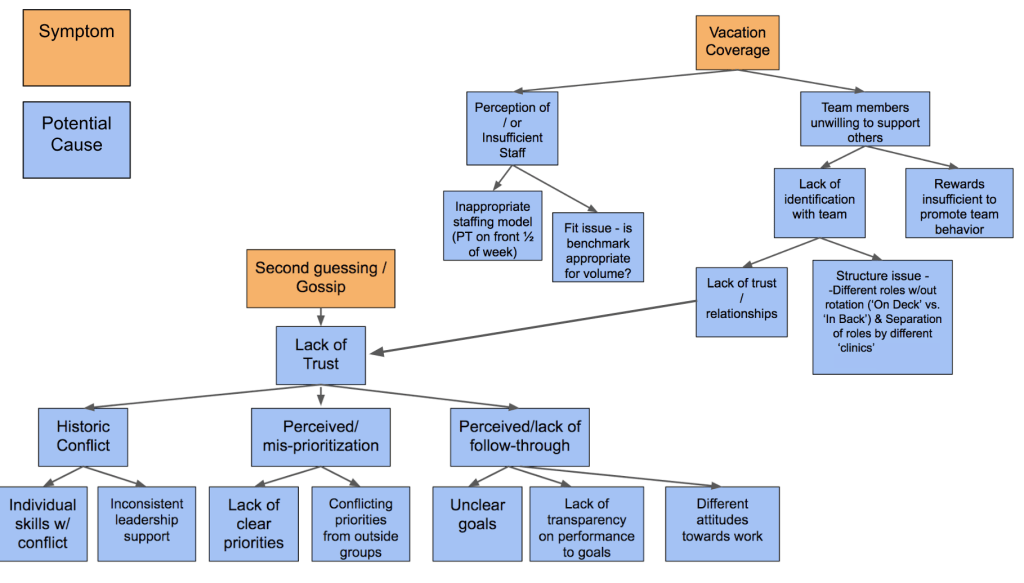
Diagnostic Tools
Diagnostic Tools: I conducted an organizational diagnosis on one of the clinics at a healthcare organization for our ORGD 6040 course. My diagnostic process included collecting data from multiple sources such as the staff engagement survey, patient satisfaction, staff interviews, observations, etc. In order to make sense of the data and generate hypotheses about what may have been impacting the team, I utilized a number of different tools, including a 5-Why analysis, and assessed the team against Hackman’s model of team performance. To see a full screen view of two of the Diagnostic Tools, click on the embedded link.
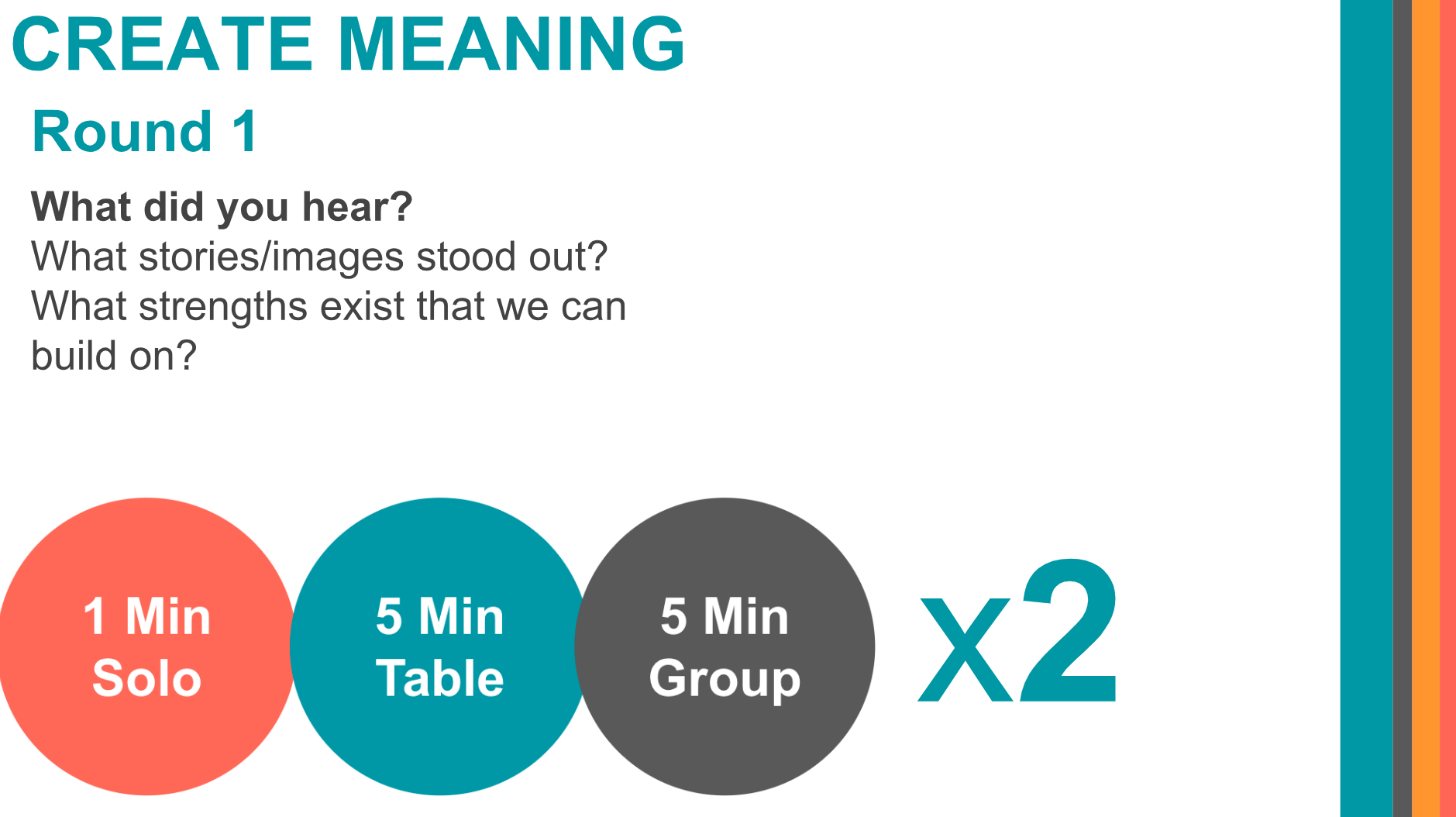
Dialogic Data Collection
Dialogic Data Collection: The image shown here is one ppt slide from a blended dialogic and diagnostic event hosted by our EMOD Cohort to examine the desire and feasibility of creating an EMOD Alumni Association. This particular slide is a good example of the dialogic process – using dialogue as a means to gather data and generate action by creating meaning collectively. The event our team designed was meticulously planned to ensure that each step along the way, we were following a logical synthesis of information and incorporating all voices. To see the full agenda and ppt slides, click here: EMOD Alumni Dialogic Event
EMOD Experience
Despite having worked as an OD practitioner for several years prior to coming into the EMOD program, I was someone timid to admit that I was not familiar with a through Diagnostic process for identifying root cause. In my past I often heard terms like ‘gap analysis’ and ‘root cause analysis’ however I was not trained in the tools and processes needed to use them well. Hence, when I met with a client, I often made recommendations based on what I had seen others make, what was available in my toolkit, or simply based on what the client asked for. I feel that I have made significant strides in this set of competencies through the multiple opportunities to read about and apply the diagnostic process, each time increasing my competence and confidence. As I reflect on what I learned over those opportunities, there is a quote (really a chapter section) in Peter Block’s Flawless Consulting (2011) that states “The problem is not the problem.” What he means by this is that the client typically shares the presenting problem, which is where they are feeling pain. That presenting problem, however could be caused by a myriad of different things upstream. For me, that quote sums up this competency in emphasizing the importance of not taking things at face value and continuing to dig deeper.
In-Class Work: Our first encounter with the diagnostic model occurred in ORGD 6010 when we read the article entitled “Organizational Diagnosis: An Evidence Based Approach” (McFillen, O’Neil, Balzer & Varney, 2013). I recall being grateful for the model with boxes and arrows that helped my brain to synthesize the new language I was learning. Armed with that model, as well as our Cummings & Worley book, we conducted a group project entitled OD&C In Action. As a small team we reviewed a current project I was working on in my organization and applied the diagnostic model to steps that had already been taken, as well as thinking about recommended next steps. During the assignment I thought “how great, it looks like I have been using the diagnostic process all along.” As I reflect back, I recognize there were and still likely are missed opportunities to look at relevant data and ensure I am continuing to move towards root cause versus the presenting problem.
The assignment where I really began to understand the complexity of the diagnostic process (for someone still in the mechanical phase) was in ORGD 6040 in our Individual Diagnosis assignment where I reviewed one of the clinical departments at my organization. Another tool set that was introduced in ORGD 6040 were a number of different diagnostic models. During this semester, my Diagnosing Organizations: Methods, Models and Processes (Harrison, 2005) book grew in thickness with the number of page flags and margin notes I added as I poured through the text to support my diagnostic process. I found the models provided, as well as a few I found on my own, extremely helpful in thinking about the order of my hypothesis (i.e. as organization context and culture feed into group processes and ultimately outputs) and where the symptoms I was hearing from the leader may have been coming from. While I certainly found the assignment to be a challenge, both in complexity and scope (despite it being a small department) I was energized by seeing how the tools and processes I was applying were helping to illuminate my path as I worked with the clinic manager to support effective team relations and increased team performance.
This previous assignment and the tools we learned in ORGD 6040 again helped to prepare us for our capstone project where we are now applying the diagnostic process to a full, albeit small organization. Prior to meeting our client, we identified some discovery questions that would allow us to understand the broad landscape of the organization and allowed for the opportunity to dive deeper into areas that stood out as questions for us, or concerns for the client. We set up an action tracker and are labeling our activities according to the different steps in the diagnostic process in order to ensure we do not move too far ahead prior to doing our due diligence in the data gathering phase and in accordance with the time constraints. We are also reviewing our data against Weisbord’s 6-Box model to ensure we have explored each of the components of the organization prior to moving into recommendations as we recognize that each of these subcomponents influence one another.
The Dialogic Team assignment from 6040 has influenced our capstone project as we think about our data collection process, approaching it from both a dialogic and diagnostic approach. A subgroup of our team working with our organization to create an interview protocol and surveys for various stakeholder groups. Meanwhile, we are creating a strategic planning session that will both support one of our intended outcomes for the client, as well as serve as a dialogic process for gathering additional data about the organization including but not limited to; the organization’s perception of internal strengths and weaknesses, environmental influencers, who they see as their core customer, and how effectively they communicate during the process. We have several team members who will be supporting the event facilitation which will allow us multiple perspectives to take in all of these various data points and analyze them to get a more holistic picture of the organization.
Application Outside of Class: Engagement survey – utilizing organizational models to ensure when we implement a solution it is truly addressing root cause, e.g. Issue with RN engagement in our ambulatory clinics. A perennial issue that comes up is the concern that there is sufficient development available to RNs. The leadership asked about what additional development opportunities we can offer. I recommended a focus group to understand the story behind the data and found out that RNs don’t have adequate coverage and are unable to attend the offerings that are available. It wasn’t about adding more options, it was about creating a structure and process that allowed the RNs to participate in the opportunities.